
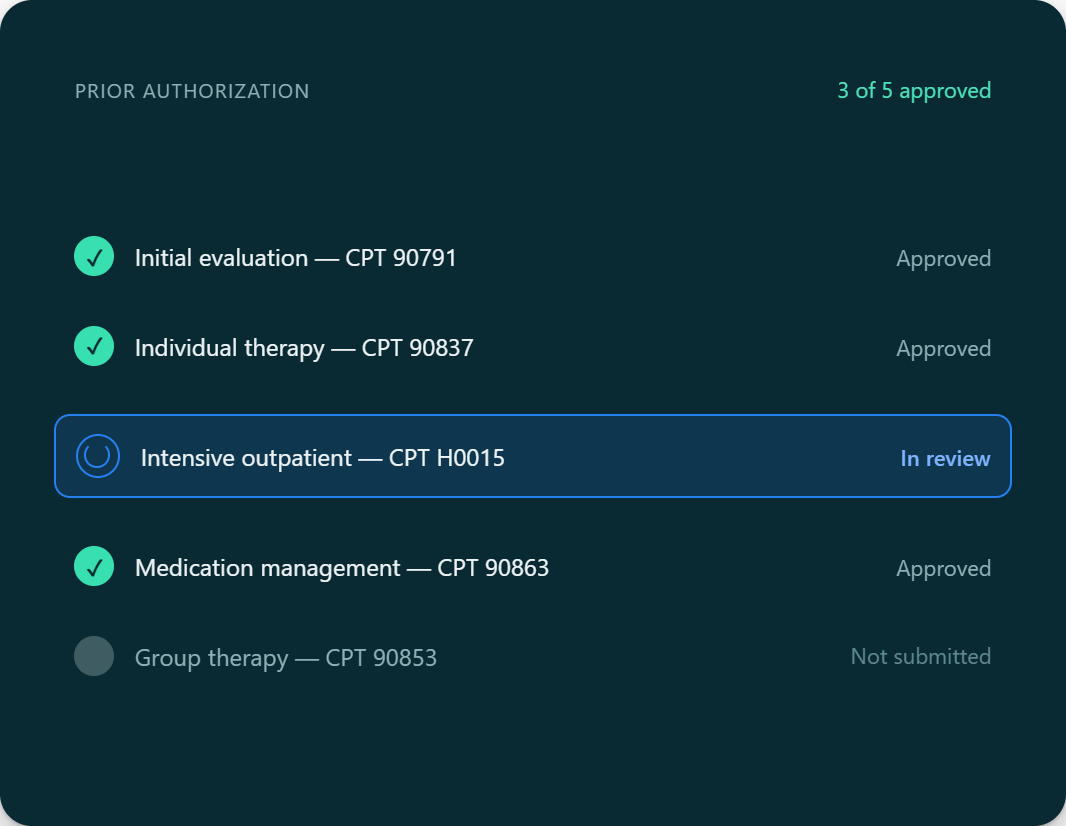
You have thousands of payers. You're actively managing a fraction of them.
The rest sit on Medicare or Medicaid defaults, or on settings that haven't been updated in years — every one a place you could be denied or underpaid without knowing. Tally's platform learns each payer's real behavior so the un-managed majority stops leaking.
- Oxygen
- PAP/CPAP
- Ventilators
- Wheelchairs & mobility
- Documentation rules
- LCD alignment
Every equipment category has its own rules — and they keep moving.
Oxygen, breathing devices, mobility equipment, ventilators: each has different documentation and
coverage requirements, and payers change them constantly. The platform keeps
up so your team doesn't have to memorize it.
Oxygen
Coverage and documentation vary by payer.
PAP/CPAP
Compliance and documentation rules.
Ventilators & respiratory
High-scrutiny documentation.
Mobility
Assessment and eligibility rules.
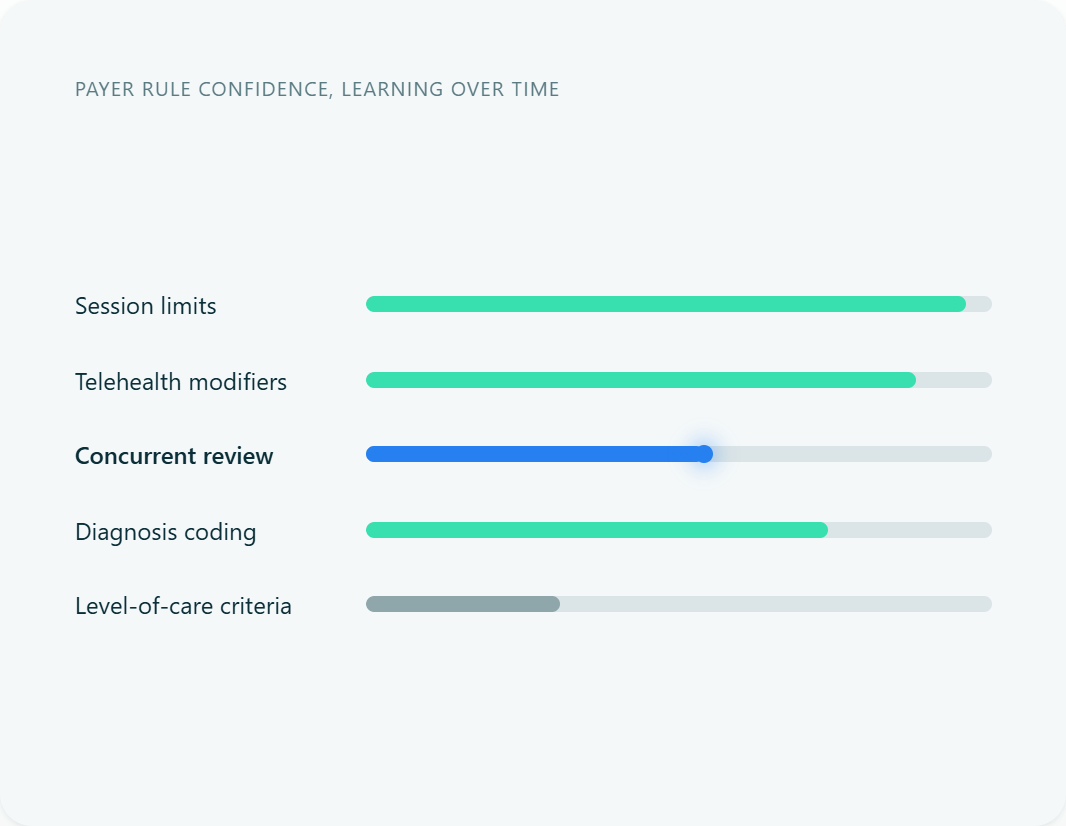
Two kinds of leakage: denials you could have prevented, and underpayments you never caught.
Denial prevention — the platform flags claims likely to be denied before they go out, so you fix them first.
Underpayment detection — it catches when a payer pays less than it owed, so you can recover it.
FAQ's for AI Revenue Cycle Management for DME Providers
What is AI revenue cycle management for DME providers?
AI revenue cycle management for DME providers combines RCM experts with a platform that learns how each payer actually behaves — flagging claims likely to be denied before submission and catching underpayments across the thousands of payers most DME billing teams can't actively manage.

How does it handle different equipment categories like oxygen or mobility devices?
Oxygen, PAP/CPAP, ventilators, and mobility equipment each carry different documentation and coverage rules that payers change often. The platform tracks those rules by category so your team doesn't have to memorize every update.
Does this catch underpayments, not just denials?
Yes. Denial prevention flags claims likely to be rejected before they go out. Underpayment detection separately catches when a payer paid less than it owed, so it can be recovered.
Who is AI revenue cycle management for DME providers built for?
DME and HME providers billing a high volume of payers, many of whom sit on outdated default rates or settings that haven't been reviewed in years — where denials and underpayments accumulate unnoticed.

Tally Inc. has officially achieved SOC 2 Type II Compliance!
Tally © 2026 All Rights Reserved.